Bitcoin: Two Days to Save the Crypto Bull Run as the Weekly Close Decides
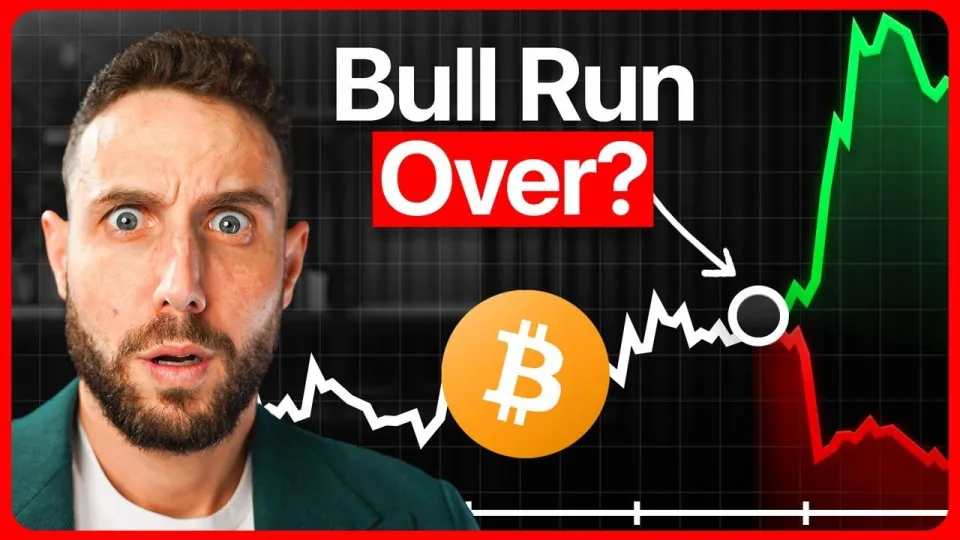
Video: Bitcoin Has 2 DAYS to Save the Crypto Bull Run
You can order the same kind of articles for your own video to boost it on YouTube and Google. Just message the Telegram bot @sat_sit_bot. Articles with your video embedded are written and posted by the bot itself — on popular topical sites (no ads). Free trial — 50 articles.
· based on the channel EllioTrades
Key takeaways
- The weekly Bitcoin candle close is framed as the deciding event for whether the crypto bull run continues or breaks down.
- EllioTrades publishes a trading plan for BTC and altcoins with the levels he is watching and the coins he would buy if support holds.
- The setup is binary: a hold above support keeps the uptrend intact, a confirmed break shifts the plan to defence and lower buy zones.
- Altcoins are treated as higher-beta versions of the BTC chart, so the BTC close comes first and alt entries come second.
- Risk is managed by pre-defined invalidation levels and staged entries rather than by predicting the exact bottom.
Bitcoin has roughly two days before its weekly candle closes, and that close is the single most important input for whether the crypto bull run continues or rolls over into a deeper correction. The practical answer for traders is simple: hold the support zone into the weekly close and the uptrend stays valid, with altcoins following BTC higher; lose it on a confirmed close and the plan shifts to defence, lower buy zones and patience. EllioTrades lays out that binary framework in his latest breakdown, and the same logic applies whether you trade spot or leverage — you can also register on Kalshi and claim the $50 trading bonus if you want to express the view on prediction markets instead of spot.
Why the weekly close matters more than any single day
A weekly candle aggregates five days of order flow, so a close is far harder to fake than an intraday wick. That is the core of the argument: daily candles get pushed around by liquidations and thin weekend books, while the weekly close is where larger players have to show their hand. If Bitcoin closes the week above the support band that has held through the recent retrace, the structure of higher lows survives and the bull market case stays intact. If the candle closes below it, the market has printed a lower low on the higher timeframe, and that changes the probabilities for every altcoin in the portfolio.
The framing is deliberately time-boxed. Instead of asking whether Bitcoin will reach a specific price in November, the question becomes what happens in the next 48 hours. That is a tradable question, because it has a defined resolution point and a defined invalidation level.
The levels and the two scenarios
Scenario planning is the whole method here, and it comes down to two branches.
- Support holds into the weekly close. The uptrend remains valid, dips are treated as entries rather than exits, and the focus moves to which altcoins are showing relative strength against BTC.
- Support breaks on a weekly close. The plan flips to capital preservation: reduce exposure, wait for a reclaimed level before re-engaging, and keep a shopping list ready for lower prices.
The important detail is the word close. A wick below support that recovers by Sunday is noise; a body that settles below it is information. Traders who act on the intraday break get stopped out on the reclaim, which is exactly the pattern that punishes reactive positioning. The levels themselves are best drawn from the recent swing lows and the range that has contained price since the last leg up, and they should be marked on the chart before the close, not after it.
Altcoins: which coins to buy if support holds
Altcoins are not a separate trade — they are a leveraged expression of the Bitcoin chart. When BTC holds support, capital rotates down the risk curve into large caps first and then into smaller names; when BTC breaks, altcoins fall harder and faster because their order books are thinner. That asymmetry is why the BTC weekly close has to be resolved before any altcoin position is sized up.
The coins worth watching are the ones holding above their own support while BTC tests its own. Relative strength during a Bitcoin pullback is one of the cleanest signals available: if an altcoin is printing higher lows while BTC is printing lower lows, buyers are defending it for a reason. The reverse also holds — an altcoin making new lows into a BTC bounce is a warning, not a discount. Position sizing should reflect that beta: a 5% move in BTC can be a 15% move in a mid-cap, so the same dollar risk requires a smaller position.
The bearish case and the doubts worth taking seriously
A meaningful share of traders are not convinced the bull run survives, and their arguments deserve a hearing rather than a dismissal. The strongest version is that a very short, shallow bear market would leave the next bull leg weak, because the market never finished flushing excess leverage. A second is that weekend liquidity is thin and market makers step back, so retail flow alone cannot rescue a falling Bitcoin price — meaning a Sunday-night bounce is not proof of anything until the weekly candle actually closes. A third is dominance rotation: if BTC dominance keeps climbing, altcoins can bleed even while Bitcoin holds its own support.
There is also a structural catalyst outside the chart. Index providers periodically review whether digital-asset treasury companies belong in global equity benchmarks, and a negative decision would hit the vehicles that have been absorbing corporate Bitcoin demand. That kind of headline risk can override a clean technical setup, which is another argument for staged entries and hard invalidation levels rather than all-in conviction.
A practical checklist before the candle closes
Execution beats prediction, so here is the sequence to run through before the weekly close.
- Mark the support band on the weekly chart and write down the exact price that would invalidate the bullish structure.
- Decide position size in advance for both branches — what you hold if support survives, what you cut if it fails.
- Pre-commit to the rule that only a weekly close counts, so an intraday flush does not trigger an emotional exit.
- Rank altcoins by relative strength against BTC over the past two weeks and keep that list ready for either outcome.
- Keep a cash buffer for the scenario where support breaks and better prices appear; wanting a cheaper entry is only useful if you have liquidity when it arrives.
The counter-argument from experienced traders is worth noting: having to dollar-cost average higher is actually a sign of a confirmed bull market, and a confirmed bull raises the probability of larger gains. Cheaper entries are only better if the trend survives — which is precisely why the weekly close, not the discount, is the thing to watch.
Tools and links mentioned in the breakdown
- Kalshi: trade the outcome and get $50 after a $50 trade
- Liquid: trade with 10% off fees
- WEEX: deposit $100 and unlock up to $4,000 in bonuses
- fomo: follow the public trading journey
- EllioTrades on X
Bottom line
The next weekly Bitcoin close is the decision point: above support, the bull run stays alive and the job is picking the altcoins with relative strength; below it, the job is protecting capital and waiting for a reclaim. The plan is not a prediction of a specific price target but a set of conditional rules, which is what makes it usable in either direction. EllioTrades, the author of the video breakdown, frames the setup as a two-day window in which the market chooses its path. If you want to position around that outcome without buying spot, open a Kalshi account through the bonus link and size the trade to your own risk tolerance.
Source: Bitcoin Has 2 DAYS to Save the Crypto Bull Run · Markdown version
Questions & answers
Does a wick below support count as a breakdown?
No. The framework treats only a weekly candle close below the support band as a breakdown, because intraday wicks are frequently reversed by the time the week ends. A close below support shifts the plan to defence; a wick that recovers leaves the bullish structure intact.
Should I buy altcoins before the Bitcoin weekly close?
Most traders are better off waiting for the close, because altcoins are a higher-beta version of the BTC chart and fall harder when Bitcoin breaks down. If you do enter early, use smaller size and a hard invalidation level, and favour coins holding above their own support while BTC tests its own.
Is it better to wait for a cheaper Bitcoin entry or buy strength?
It depends on whether the trend survives. Buying a dip only pays if support holds; if the bull case is invalidated, the cheaper price comes with lower odds of recovery. Many experienced traders prefer having to average up into a confirmed uptrend, since confirmation raises the probability of larger gains.
What non-chart risks could override the technical setup?
Headline risk from index providers reviewing digital-asset treasury companies, thin weekend liquidity when market makers step back, and rising BTC dominance that drains altcoins even while Bitcoin holds support. Any of these can override a clean chart pattern, which is why staged entries and defined invalidation levels matter.